Caricamento carrello…
 Loading...
Loading...
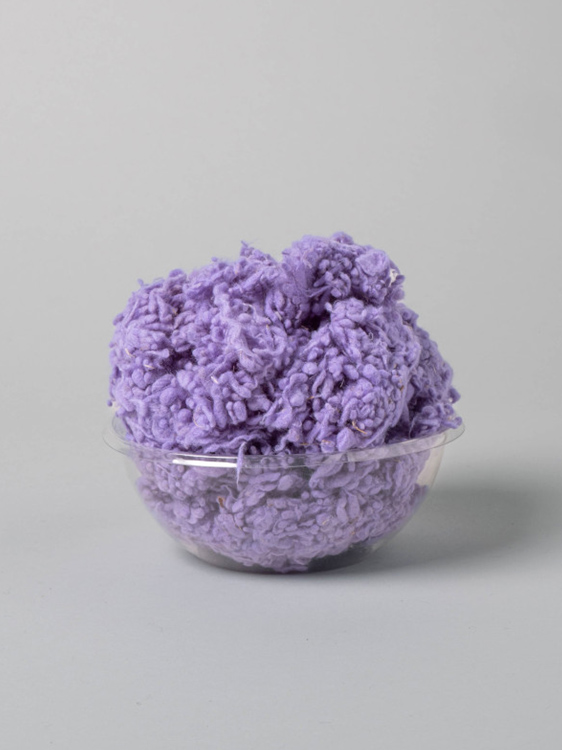
Loading...Merino wool nepps are small creative elements made from pure carded wool, designed to add texture, color and three-dimensionality to fiber art and felting projects. The compact structure of merino fiber, combined with craftsmanship, results in regular yet soft-touch shapes that are perfect for decorative and functional applications. Versatile and lightweight, they can be used both as aesthetic details and as structural components within textile creations and design projects.
Availability and packaging
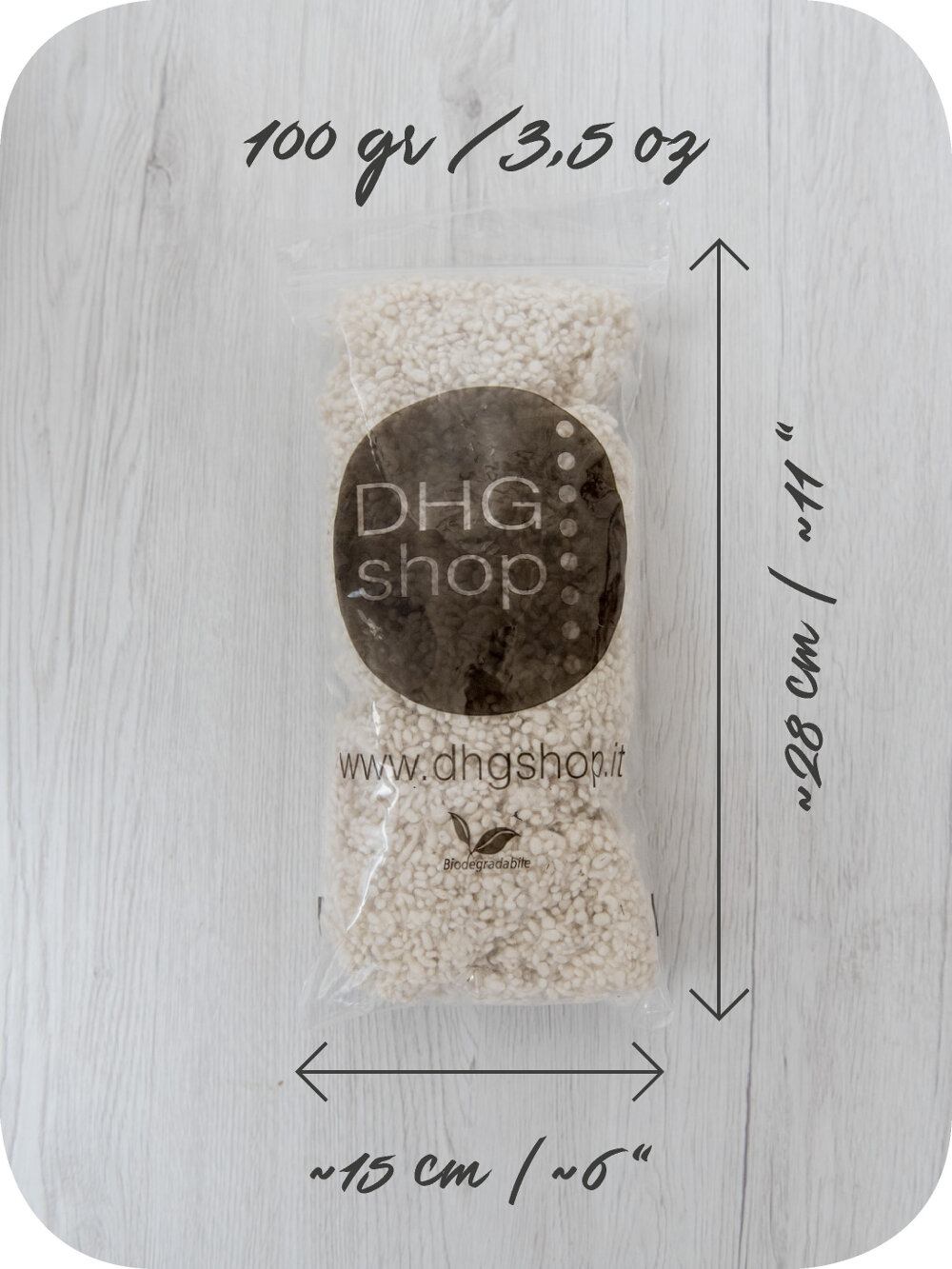
Our wool nepps is available in 100 g, 500 g and 1 kg packages, by color. Each package has a natural tolerance of ±3%. The various package sizes are designed for both those who need small quantities and those who need large quantities and/or want to save money. For shipments outside the EEC, the packages are vacuum-sealed, reducing their volume and lowering shipping costs. Don’t worry: once opened, the wool returns to its original volume, soft and fluffy, with no loss of quality.
Vegetable impurities
These types of carded wools go through several steps in production. They range from carbonizing to washing, dyeing, and carding. However, it is not possible to completely eliminate vegetable impurities, which should be regarded as an inherent characteristic and not a quality defect of the product.
Extra fine merino nepps (about 19 microns).
Wool nepps are made from carded merino wool fiber, which is characterized by high fineness, good elasticity and natural cohesion ability. The compact felt structure allows the fibers to intertwine stably, creating solid yet lightweight elements. The surface is slightly velvety, with an even texture that is pleasant to the touch, while maintaining the typical softness of merino wool.
The merino wool used for nepps production comes from selected farms located mainly in South America, particularly in the Patagonian areas between Argentina and Uruguay, territories recognized for the quality and consistency of wool production. The climatic conditions and wide availability of natural pastures favor the breeding of merino sheep with fibers of excellent fineness and uniformity. The entire supply chain is controlled to ensure traceability, raw material quality and compliance with production standards.
Our merino wool is mulesing-free, meaning it comes from farms that do not practice mulesing, a surgical procedure used in some parts of the world to prevent parasitic infestations in sheep. The choice to use wool from supply chains that exclude this practice reflects our commitment to animal welfare and more responsible farm management.
The dyes used for our products meet the requirements of the OEKO-TEX standard, which guarantees the control and limitation of substances potentially harmful to human health and the environment.
Fiber dyeing is carried out in our dyehouse in Italy, in compliance with current European regulations on chemicals and environmental safety, including the REACH Regulation (EC No. 1907/2006), which governs the registration, evaluation, authorization and restriction of chemical substances.
Operating within the European Union also entails compliance with additional provisions on environmental protection and textile product safety, such as the CLP Regulation (EC No. 1272/2008), relating to the classification, labeling and packaging of substances and mixtures. This regulatory framework ensures that dyeing processes are conducted according to high standards of safety, traceability and environmental responsibility, offering a reliable product for both the end user and the environment.
Merino wool nepps are perfect for needle felting, forwater felting, for spinning.
Because colors may vary depending on the settings of the monitor or device being used, we recommend that you purchase our Color Folder to check the shades live before placing your final order. Want to check the quality of the material? Choose our Sample Box
CAUTION: All of our colors generally exhibit high lightfastness and fastness to washing. However, fluorescent colors (80's collection), in addition to having a lower lightfastness, may also suffer significant color loss in the presence of alkaline or particularly aggressive soaps, as well as with prolonged processing or washing. This phenomenon can occur, to varying degrees, even with dark and particularly bright colors. For materials dyed with these shades, we always recommend that a preliminary processing and washing test be carried out on a small sample before making the final design. This precaution is essential, especially when dyed materials are combined with unbleached or light-colored fibers.
Finally, to best preserve the colors, it is recommended that artifacts not be dried in direct sunlight, but in a shady place.