Caricamento carrello…
 Loading...
Loading...
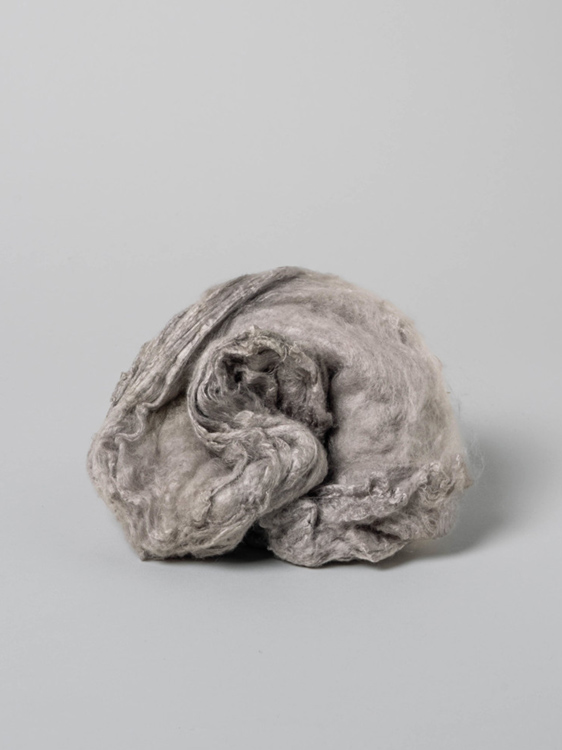
Loading...Silk hankies are a pure, unspun form of the silk fiber, obtained by processing natural silk into thin, light, compact plies. They take the form of soft, regular sheets of fiber in which the silk retains its original characteristics of fineness, luster and softness. Use them to add a precious and luminous touch to creations. Thanks to their natural luster and thin, irregular texture, they blend easily between other fibers, creating delicate light effects, silky reflections and light transparencies. Or insert them into fabrics, felts or layered surfaces: they will enhance the final work with a refined and distinctive accent, capable of enhancing the materiality and depth of the artifact.
Availability and packaging
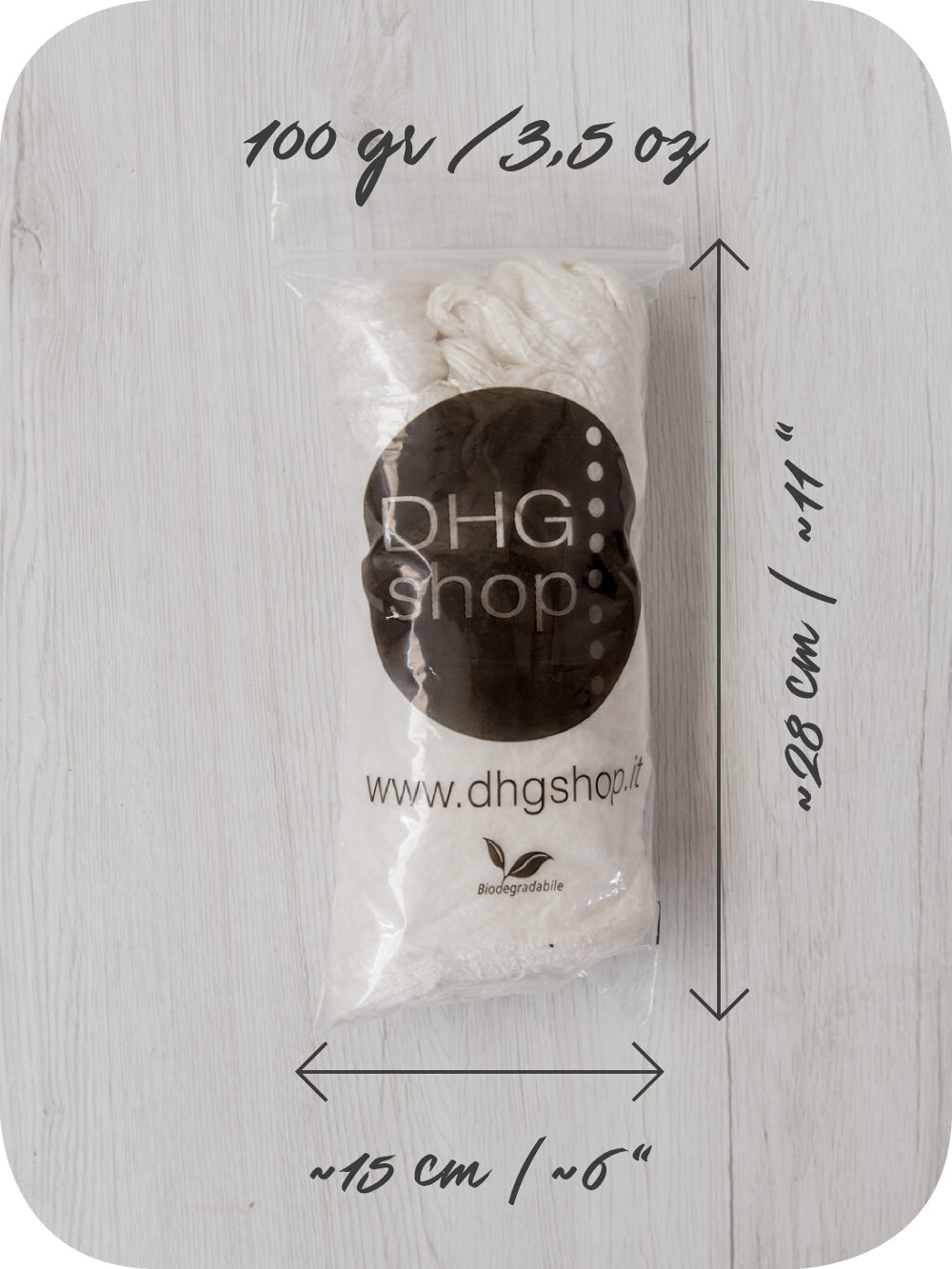
Silk hankies are available in packs of 10 g, 50 g and 500 g per color. Each package has a natural tolerance of ±3%. The different packages are designed for both those who need small quantities and those who need large quantities and/or want to save money.
For non-ECE shipments, the packages are vacuum-packed, reducing volume and lowering shipping costs. Don’t worry: once opened, the fiber returns to its original, fluffy volume with no loss of quality.
Silk fiber in squares of about 25x25 cm.
Silk is a natural fiber of animal origin composed mainly of fibroin, a structural protein that gives it high strength despite its fineness. In A1 grade tops, the fiber is extremely uniform, clean, and has a high average length, a characteristic that ensures smooth and regular spinning. It is a fiber in continuous filament form, with excellent natural luster (silky sheen) and smooth surface, free of impurities or neps. Mechanically, it offers excellent tensile strength among the highest natural fibers, while maintaining good elasticity and controlled deformation capacity. It also exhibits strong dye-absorption capacity, allowing deep and uniform dyeing, and natural thermoregulation and breathability, typical of noble protein fibers.
Technically speaking, this is silk processed in unspun form: the fibers are opened and reorganized into thin compact veils, instead of being made into continuous thread. This processing comes from intermediate stages of the silk supply chain and belongs to the category of discontinuous textile materials, which are also traditionally used in craft and creative fields because of their natural brightness and versatility.
Silk hankies originate from the long Asian silk tradition, first developed in China and then spread along the Silk Road to India and the rest of Asia. The fiber comes from the silkworm(Bombyx mori), still reared mainly in China and India, the world's major silk production hubs.
The dyes used for our products meet the requirements of the OEKO-TEX standard, which ensures the control and limitation of substances potentially harmful to human health and the environment.
Fiber dyeing is carried out in our dyehouse in Italy, in compliance with current European regulations on chemicals and environmental safety, including the REACH Regulation (EC No. 1907/2006), which governs the registration, evaluation, authorization and restriction of chemical substances.
Operating within the European Union also entails compliance with additional provisions on environmental protection and textile product safety, such as the CLP Regulation (EC No. 1272/2008), relating to the classification, labeling and packaging of substances and mixtures. This regulatory framework ensures that dyeing processes are conducted according to high standards of safety, traceability and environmental responsibility, offering a reliable product for both the end user and the environment.
They also find an excellent application in water and needle felt, where its ability to compact with other natural fibers, such as wool, makes it possible to achieve fine and refined surfaces. In the creative field it is also used for textile art and decorative work, such as textural layers, inserts or three-dimensional surfaces, due to its open and easily moldable structure.
In general, they are suitable for techniques in which work is done by layering, integration and transformation, rather than traditional structured yarns.
Since colors may vary depending on your monitor or device settings, we recommend purchasing our Color Card to check the shades in person before placing your final order. Want to check the quality of the material? Choose our Sample Box.
CAUTION: All of our colors generally exhibit high lightfastness and fastness to washing. However, fluorescent colors (80's collection), in addition to having a lower lightfastness, may also suffer significant color loss in the presence of alkaline or particularly aggressive soaps, as well as with prolonged processing or washing. This phenomenon can occur, to varying degrees, even with dark and particularly bright colors. For materials dyed with these shades, we always recommend that a preliminary processing and washing test be carried out on a small sample before making the final design. This precaution is essential, especially when dyed materials are combined with unbleached or light-colored fibers.
Finally, to best preserve the colors, it is recommended that artifacts not be dried in direct sunlight, but in a shady place.